
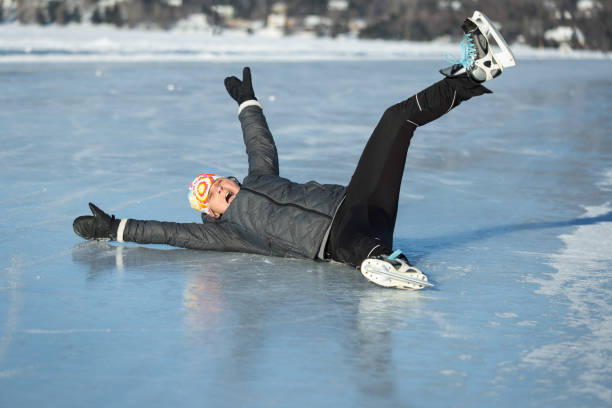
Why Falling Is One of the Most Important Skills in Ice Skating
When people think about learning to skate, they usually focus on gliding, stopping, spins, or jumps. Yet one of the most valuable skills a skater can learn is something far less glamorous: how to fall. It may sound strange, but learning to fall properly can make a skater safer, more confident, and ultimately more successful.
The Fear of Falling
For beginners, fear of falling is often the biggest obstacle to progress. The moment a skater becomes worried about hitting the ice, they tend to stiffen up. Their knees straighten, their movements become cautious, and ironically, they become more likely to lose balance.
Experienced skaters understand that falling is not a sign of failure. It is simply part of the learning process. Every new skill – from backward skating to jumps and spins – comes with a period of trial and error.
What Happens During a Good Fall?
A controlled fall usually involves:
- Bent knees
- Relaxed muscles
- Avoiding the instinct to put hands straight out behind the body
- Getting up calmly and efficiently
When skaters learn these habits early, they reduce the risk of injury and recover more quickly from mistakes.
Falling Builds Confidence
Confidence in skating doesn’t come from never falling. It comes from knowing that if you do fall, you’ll be okay.
Think about young children learning to walk. They don’t spend time worrying about every stumble. They fall, get up, and try again. This mindset is one reason children often learn physical skills so quickly.
The same principle applies on the ice.
Every Elite Skater Falls
Watch any top-level training session and you’ll see falls. Olympic skaters fall. National champions fall. Professional performers fall.
The difference is that experienced skaters don’t view a fall as a setback. They view it as information.
A fall can reveal:
- A timing issue
- A balance problem
- A weakness in technique
- An opportunity for improvement
In many cases, a fall is simply evidence that the skater is pushing their boundaries and learning something new.
Tips for Parents
If your child is learning to skate, try not to react dramatically when they fall.
Instead:
- Encourage them to get up independently when possible
- Praise effort rather than perfection
- Remind them that every skater falls
- Celebrate persistence
The goal is to help children develop resilience alongside skating skills.
Final Thoughts
The ice teaches many lessons beyond skating technique. It teaches patience, perseverance, courage, and problem-solving.
So the next time you or your child falls during practice, remember: falling isn’t the opposite of progress. In many cases, it is progress.
Every confident skater has spent time on the ice – and occasionally on it!

